The home barista's field guide • UK edition
Is your tap water ruining your espresso?
The invisible ingredient doing two jobs at once.
Water controls both flavour extraction and scale inside the machine. Too little mineral is flat; too much is harsh and damaging.
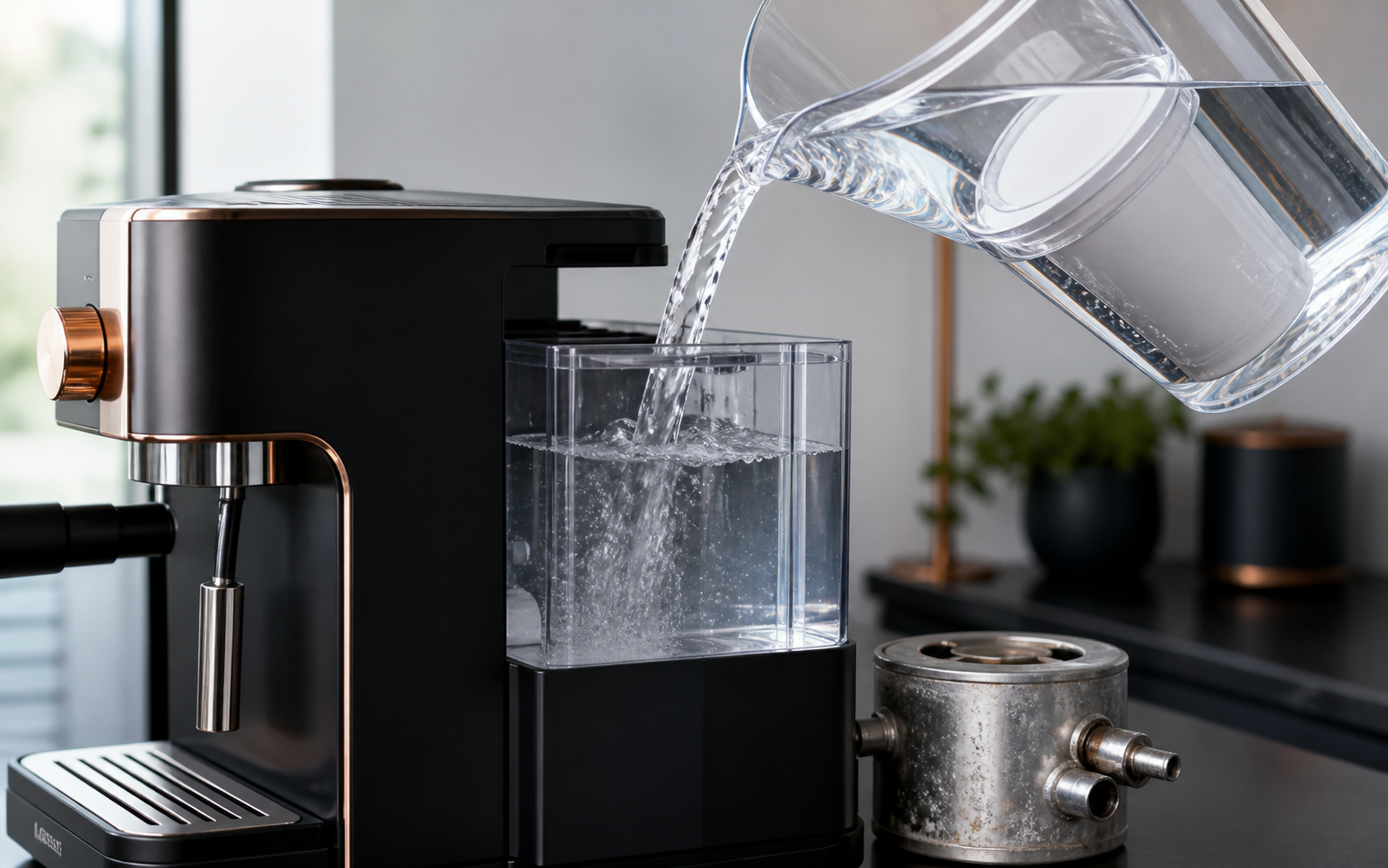
Use filtered water as the easy default. Aim for moderate mineral content, avoid distilled water on its own, and descale on a schedule that matches local hardness.
You've dialed in your grind, timed your shot, and still your espresso tastes flat or overly bitter. Before you blame your beans or your technique, check what's coming out of your tap. Water makes up roughly 98% of your espresso, and its mineral content directly affects both what ends up in your cup and how long your machine survives.
Too soft. Useful middle. Too hard.
Too soft
Weak extraction and flat, sour cups.
Useful range
Enough mineral for balanced extraction.
Too hard
Harsh flavour and faster scale buildup.
How Minerals Change Extraction
Espresso extraction is fundamentally a process of dissolving flavor compounds from ground coffee into water. The minerals in your water—primarily calcium and magnesium—act as tiny hooks that latch onto and pull out these compounds. Too few minerals and you get weak, sour espresso because the water can't grab enough of the soluble flavors. This is why distilled or reverse-osmosis water produces terrible coffee despite being "pure."
Too many minerals create the opposite problem. Over-mineralized water extracts aggressively, pulling bitter compounds and astringent tannins that would normally stay in the puck. The result tastes harsh and muddy. Worse, different minerals extract different flavor categories. Magnesium tends to pull fruity, acidic notes while calcium emphasizes body and sweetness. Water dominated by one mineral produces unbalanced espresso.
The sweet spot sits between 50-150 parts per million (PPM) total dissolved solids, with a roughly even split between calcium and magnesium. Most municipal water systems land somewhere in this range, but plenty don't—and that variance explains why the same coffee and technique produces different results in different cities.
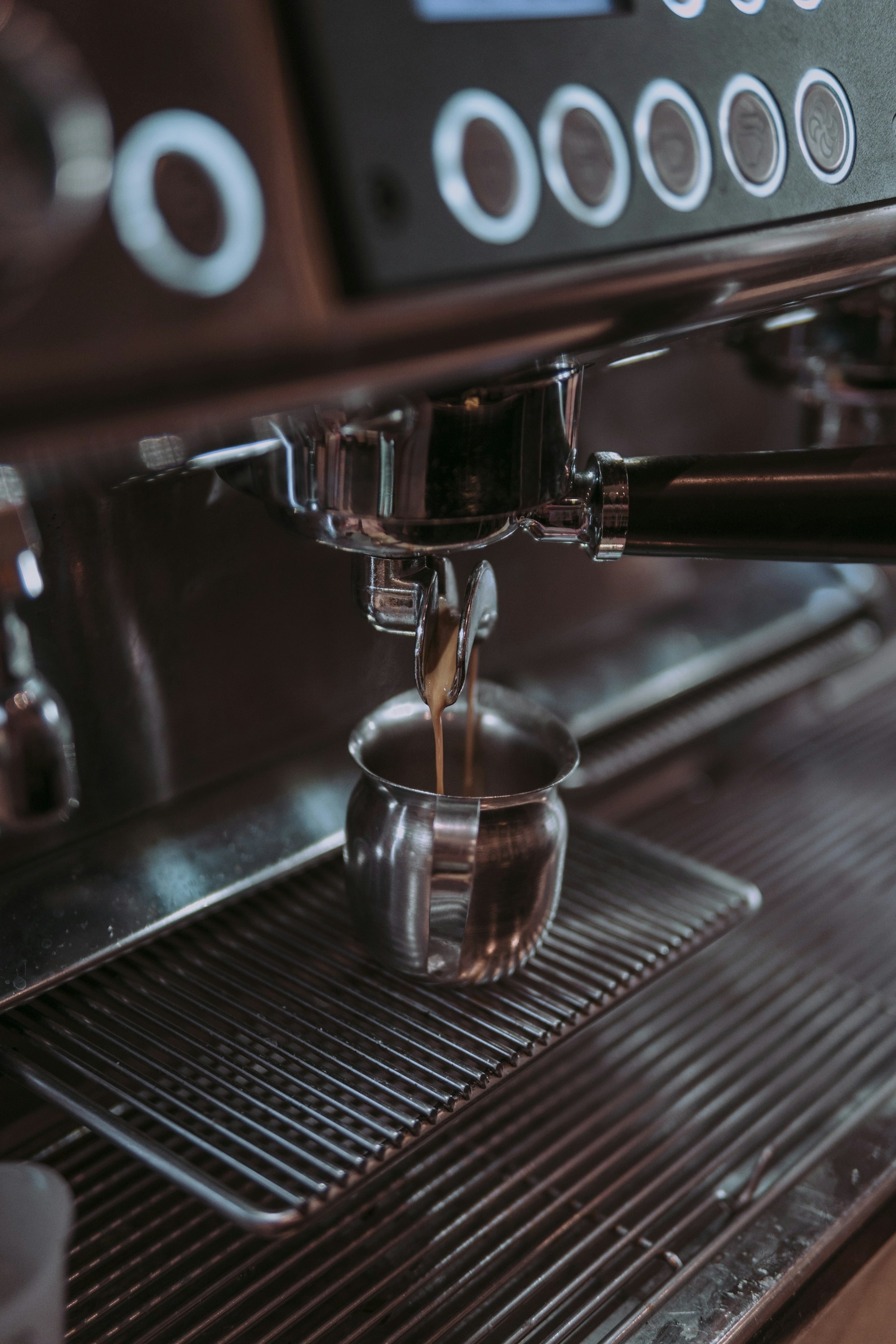
The Scale Problem
Hard water (high mineral content) creates a second, more visible problem: scale buildup inside your machine. When water heats up, calcium and magnesium precipitate out as crusty white deposits. These accumulate on heating elements, inside boilers, and throughout the narrow pathways of your espresso machine's internals.
Scale acts as an insulator, forcing your heating element to work harder and longer to reach temperature. This wastes energy and eventually burns out the element. More immediately, scale narrows water passages, restricting flow and making it impossible to maintain consistent pressure. Your grouphead temperature becomes erratic. Shots channel unpredictably. The machine starts sounding strained.
Descaling with citric acid or commercial solutions removes existing scale, but it's reactive maintenance—you're fixing damage after it happens. The smarter approach is using better water from the start.
Practical Fixes That Actually Work
Standard filter jugs knock down both chlorine taste and mineral content. They won't give you perfect water, but they'll move hard tap water closer to the target range and dramatically slow scale formation. Change the filter every two months with regular use. This is the minimum-effort solution that still produces real results.
Bottled water sounds expensive until you calculate volume. A shot of espresso uses about two ounces of water. A gallon jug makes 60+ shots. Not every bottled water works—many are too soft. Check the label for total dissolved solids or mineral content. You want something in that 50-150 PPM range. Brands marketed as "spring water" typically hit this target better than those advertised as "purified."
Remineralization lets you start with purified water and add back specific minerals in controlled amounts. Third Wave Water and similar products sell packets that bring distilled or RO water to ideal espresso specs. This gives you complete control and costs about fifteen cents per gallon. If you already have an RO system for drinking water, this approach makes sense. Don't install a whole filtration system just for espresso—it's overkill for home use.
What About Chlorine
Municipal water treatment adds chlorine or chloramine to kill bacteria. Both compounds smell aggressively chemical and taste worse. Even small amounts overpower coffee aromatics.
The good news: chlorine evaporates if you leave water sitting out overnight in an open container. Chloramine doesn't evaporate but any carbon filter (including those cheap pitcher filters) removes it effectively. This matters more for pour-over than espresso since the brewing temperature and pressure help drive off chlorine, but it's still worth addressing.
Testing Your Water
You don't need a lab analysis. Cheap TDS meters read total dissolved solids in seconds and cost less than a bag of good beans. Stick the probe in your tap water. Below 50 PPM means you'll need to add minerals. Above 200 PPM means you should filter or switch to bottled water. Between those numbers, you're probably fine, though a filter jug might still improve taste.
Ignore the expensive testing kits that measure sixteen different parameters. For home espresso, total mineral content and chlorine presence are what matter.
The Simple Protocol
Fill a filter jug from the tap and use that water for espresso. Descale your machine every three to six months depending on water hardness. If you still get scale buildup or unsatisfying shots, switch to bottled spring water or try remineralization packets. That's it. No plumbing modifications, no countertop filtration towers, no recurring filter subscriptions beyond the basic jug.
Good water doesn't require expensive solutions. It requires understanding what your machine needs and giving it water that won't extract badly or build scale deposits. Fix your water and you fix half your espresso problems.