The home barista's field guide • UK edition
Burr vs blade grinders
The small upgrade that can completely change your espresso.
A grinder does more than make coffee smaller. It decides whether every particle extracts together—or fights against the rest of the cup.
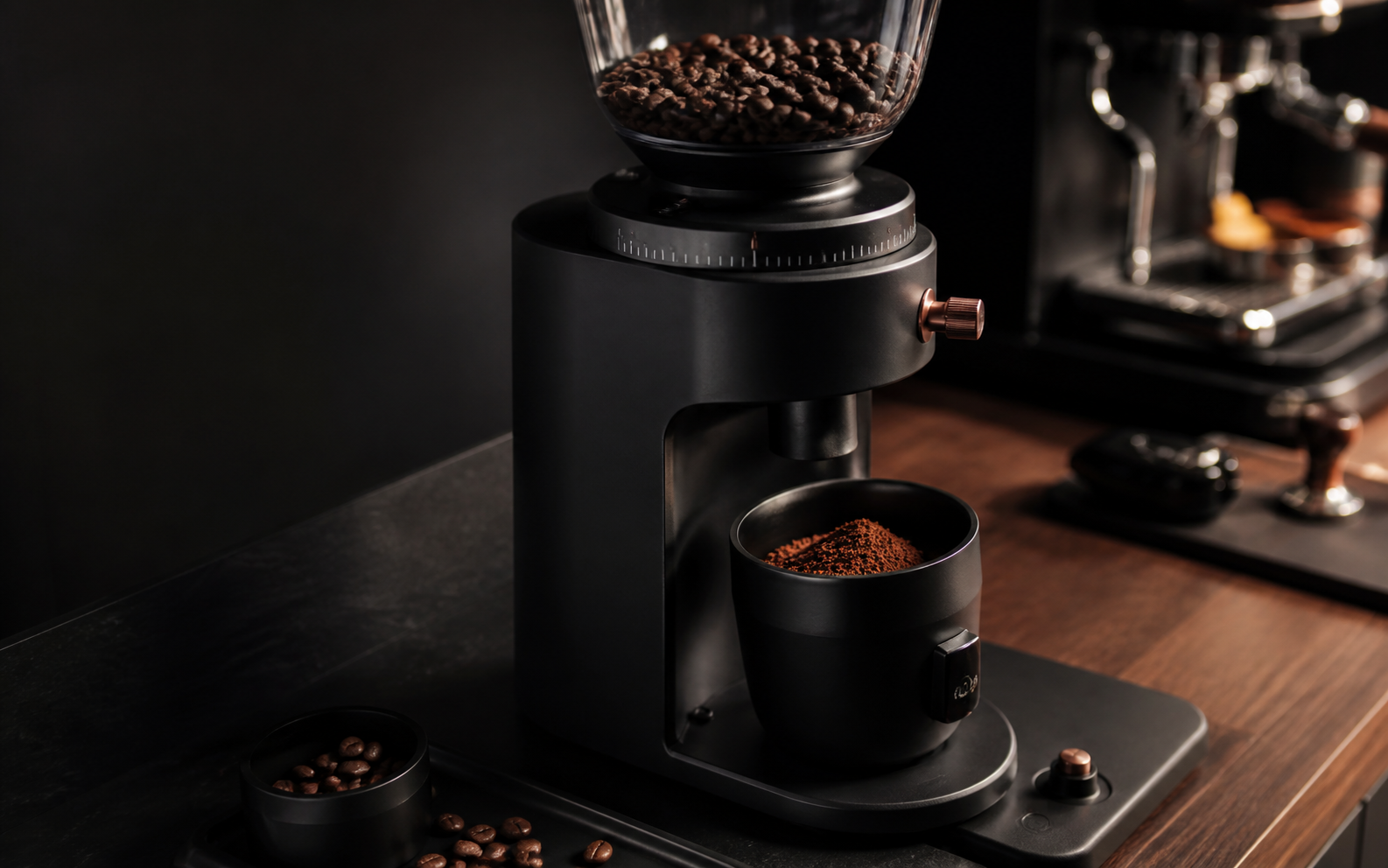
For espresso, buy a burr grinder. Its fixed grinding gap produces more consistent grounds, helping water extract the coffee evenly. A blade grinder chops at random, making repeatable shots much harder.
Most beginners spend too much on the espresso machine and too little on the grinder. If the grounds are uneven, even an excellent machine cannot make the water extract them evenly.
The difference you can taste
A blade grinder chops beans with a spinning propeller-style blade. Some pieces become powder while others stay much larger, and the mix changes from one batch to the next.
That matters more for espresso than for slower, more forgiving brew methods. Water passes through an espresso puck quickly and under pressure. Larger pieces tend to extract too little; very fine particles can extract too much. The result can taste sour and bitter in the same cup.
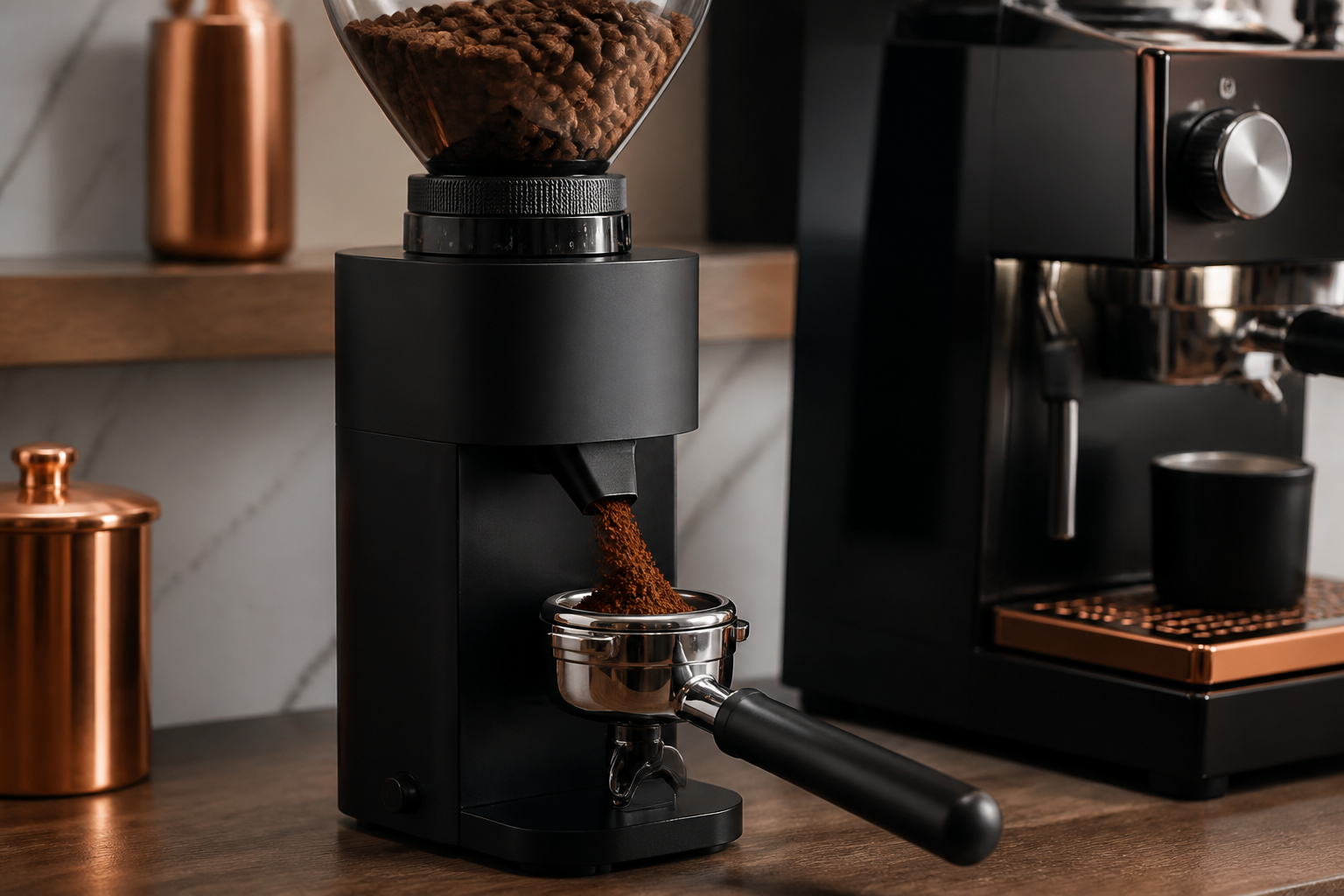
A better machine cannot rescue an uneven grind.
Why burrs are more consistent
A burr grinder crushes beans between two abrasive surfaces set a fixed distance apart. Beans must pass through that controlled gap, producing a much narrower range of particle sizes. More similar particles extract at more similar rates, making balanced and repeatable shots easier.
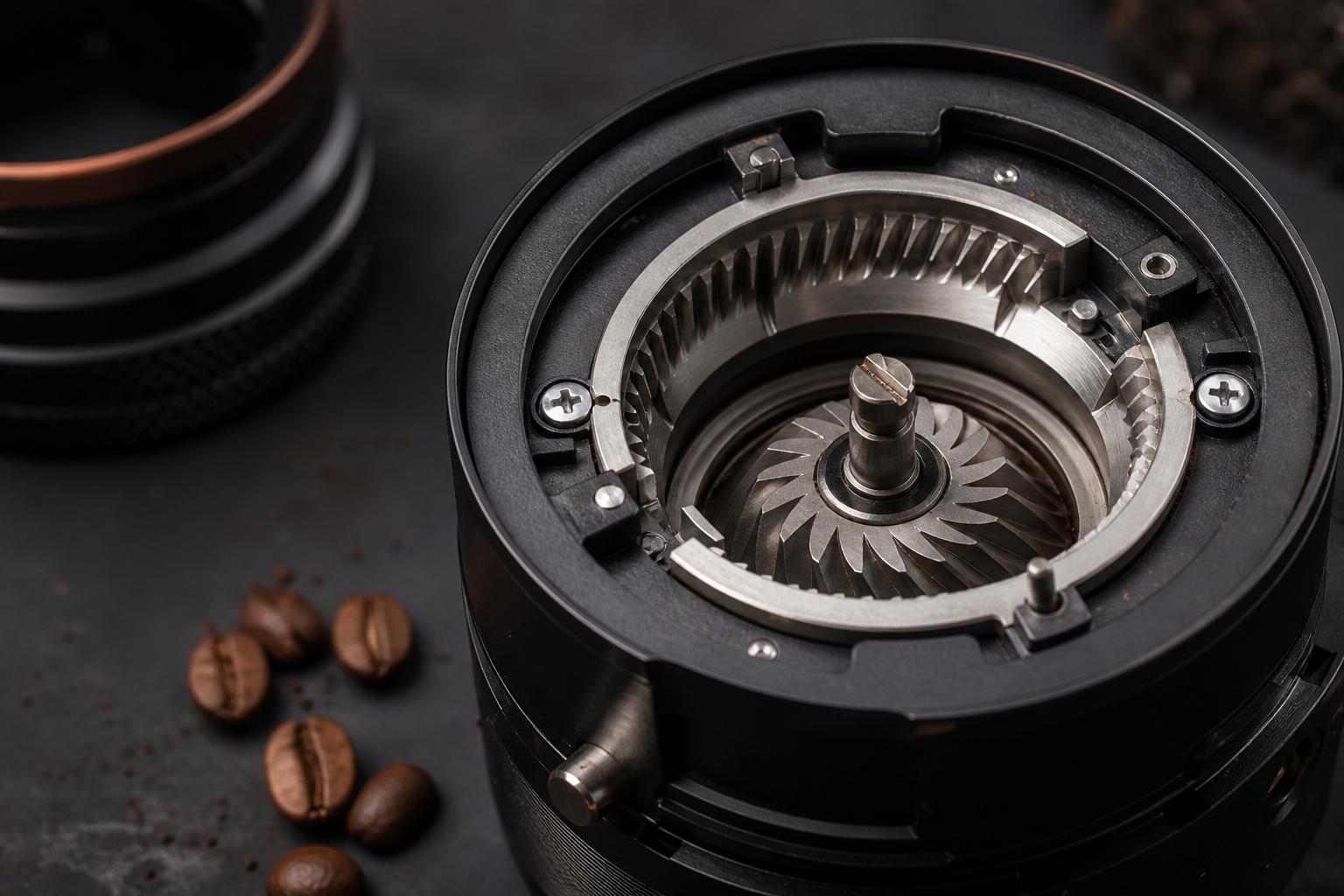
One batch. Two very different results.
Blade
Chopped at random
- Wide range of sizes
- Changes from batch to batch
- Uneven extraction
Burr
Crushed through a fixed gap
● ● ● ● ●
● ● ● ● ●
- Narrower range of sizes
- Repeatable adjustment
- More even extraction
For espresso, choose a burr grinder with small, repeatable adjustments. Consistency matters more than a long feature list.
Flat or conical burrs?
Flat burrs — two flat, ridged discs. Generally considered to produce slightly more consistent particle size distribution, at the cost of running a bit hotter (which can affect flavor at the margins) and usually costing more for equivalent quality.
Conical burrs — a cone-shaped burr inside a ridged outer ring. Slightly more forgiving of coarser grinds, generally quieter, and available at lower price points without as steep a quality drop-off.
For a first home grinder, do not let burr shape dominate the decision. At entry-level prices, adjustment range, repeatability, retention, noise and after-sales support are usually more useful comparisons.
What UK buyers should look for
Start with two essentials: consistent grinding at the fine end, and stepless or closely spaced adjustment. A grinder with only a handful of broad settings may skip over the narrow range your espresso needs.
Then check the practical details: UK warranty cover, replacement burr availability, noise, grind retention and whether the workflow suits single dosing or a filled hopper. Prices and stock change, so compare current UK retailers rather than relying on an old headline price.
Buy the grinder that makes tiny adjustments repeatable—not the one with the loudest specification sheet.
The verdict
If you make espresso, a burr grinder is the clear choice. A blade grinder can break beans into smaller pieces, but it cannot offer the controlled, repeatable particle size that espresso demands.
Already own a blade grinder? Keep it for spices or a more forgiving brew method, then put the next coffee-equipment upgrade towards an espresso-capable burr grinder.